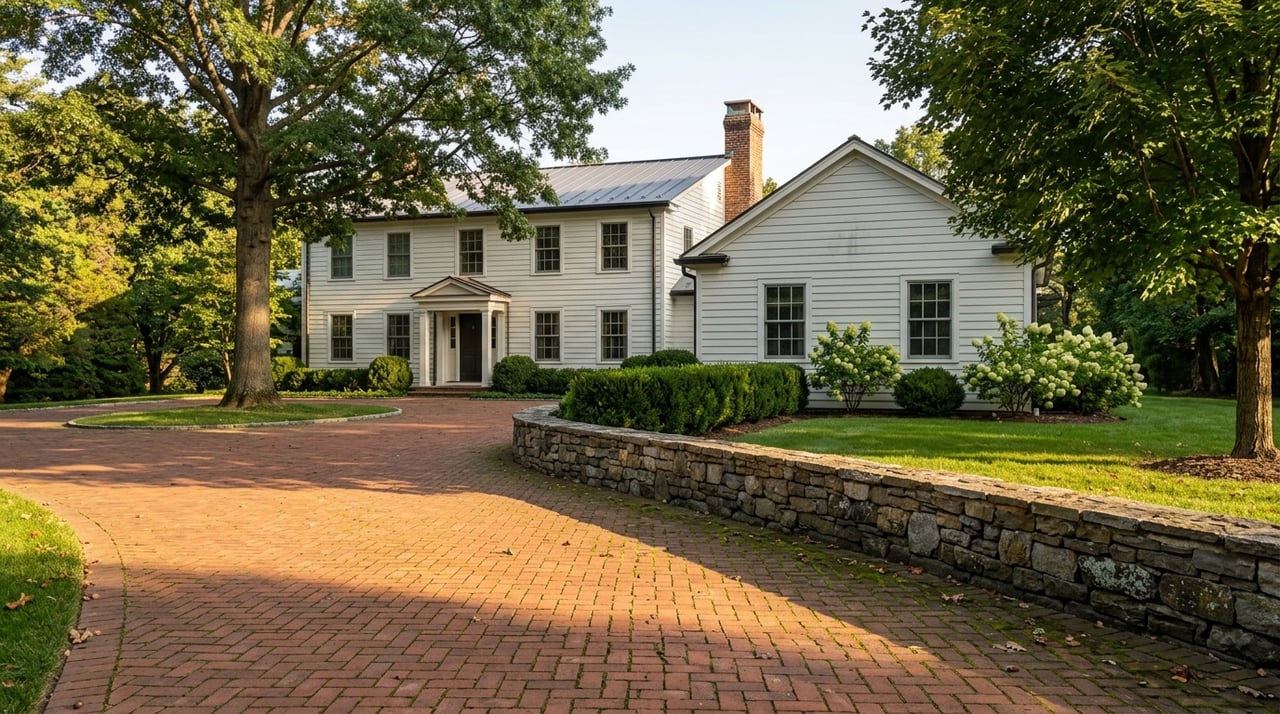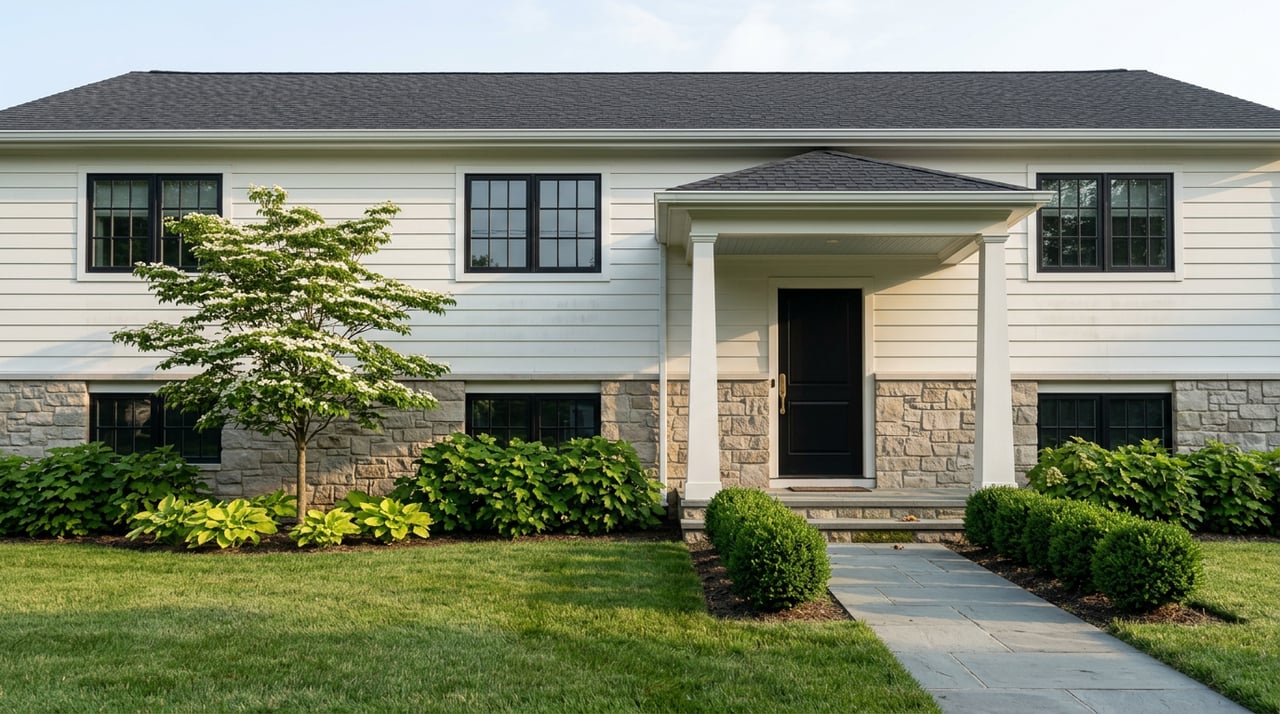
Two houses sit across the street from each other on a quiet block near the Larchmont-Mamaroneck line. Same era, same size, same school bus stop. One is inside the Village of Larchmont. The other sits fifty feet away in the Unincorporated Town of Mamaroneck. A buyer comparing them pulls up both tax bills expecting a small variance and instead finds two documents from two different government offices, arriving in two different months, calculated by two different people who never had to agree with each other.
That surprise is not a paperwork quirk. It is the actual structure of how Larchmont gets taxed, and it explains something buyers rarely see coming: the area that had the steepest tax increase last year is projected to have the softest one this year, while the area that looked calm twelve months ago is now the one climbing fastest.
One House, Two Assessors
Most buyers assume a property has one assessed value that every tax bill is built from. In Larchmont, that assumption is wrong. The Village of Larchmont operates as its own independent assessing unit, meaning the Village Assessor sets a property value used only for the Village's own tax bill. Separately, the Town of Mamaroneck's assessor determines a value for the same property that feeds the school, town, and county portions of the bill. Two assessors, working independently, can and do land on different numbers for the identical house.
This is not academic. It shows up in the mail four times a year, from three different senders:
- Town and County tax bill, published April 1, due April 30, from the Town of Mamaroneck
- Village property tax bill, published June 1, due June 30, from the Village of Larchmont
- First half of school tax, published September 1, due September 30, from the Mamaroneck School District
- Second half of school tax, published January 1, due January 31, from the Mamaroneck School District
The Town's own property tax page tells residents of the Village directly to contact Village tax officials for tax information rather than the Town office, because the Town doesn't handle that bill. A buyer relocating from a place with one municipal tax office should expect two points of contact, not one, and should expect the underlying values on those two bills to move independently rather than in lockstep.
The split runs deeper than billing. Certain exemptions, including for veterans and seniors, are administered by the Village Assessor for the Village portion of the bill, while every other exemption is handled by the Town Assessor. A veteran or senior buyer filing for relief may need to file twice, with two offices, on two different calendars, to get full relief across both tax layers.
Grieving One Bill Doesn't Touch the Other
Because the assessments are separate, so are the appeals. The Village of Larchmont holds its own Grievance Day for its Tentative Assessment Roll, generally in February. The Town of Mamaroneck holds a separate grievance deadline for its own roll, and in 2026 that date fell in mid-June, roughly four months after the Village's.
A homeowner who successfully argues down their Village assessment in February has changed nothing about the Town assessment that determines their school tax, the largest single piece of most bills in this market. The reverse is also true. Anyone planning to grieve after closing should budget for two separate filings on two separate timelines, not one clean process.
The Number That Flipped
Here is where the paradox in the headline comes from. The Town of Mamaroneck's assessment rolls let you track how each area's average property value moved from year to year, and the pattern over the last two cycles inverts what a casual comparison would suggest.
| Area | Single-family assessment growth, 2025 vs. 2024 | Single-family assessment growth, 2026 (tentative) vs. 2025 |
|---|---|---|
| Village of Larchmont | +13.14% | +5.46% |
| Unincorporated Town | +11.27% | +9.05% |
| Village of Mamaroneck | +11.33% | +6.61% |
Last year, Larchmont Village homeowners absorbed the steepest single-family assessment jump of the three areas. This year's Tentative Roll flips that entirely: Larchmont now sits at the bottom of the three, while the Unincorporated Area, which looked comparatively mild in 2025, is now running the hottest increase in town.
The lesson for a comparison shopper is specific. Checking last year's tax hike on a listing and using it to predict next year's trajectory for a neighboring area, or even the same area, does not hold up. These are three separate assessment processes moving on their own schedules, and a buyer who anchors a decision to a single year's number is reading a data point that has already changed direction once and could again.
Michael Gottfried, a 28-year resident of the Village of Larchmont and a former member of its Finance Committee, has been one of the more vocal residents tracking this pattern publicly, pointing out that the Unincorporated Area's newly elevated increase reflects assessments that grew faster there than in the areas that got hit hardest the year before. His involvement, alongside a seven-member joint Finance Committee drawn from both the Town and the Village of Larchmont that was appointed after years of resident pressure, points to something buyers should take as a signal: the people closest to this system treat year-over-year comparisons as unreliable too, which is exactly why the committee exists.
What This Means If You're Comparing Blocks, Not Towns
For a buyer weighing a Larchmont Village listing against something just outside the Village line, the honest answer is that neither area has a permanently "safer" tax trajectory. The village boundary line is not a proxy for tax stability. What matters more is understanding that you are underwriting two independent assessment processes for any Village property, and one unincorporated process for anything outside it, each of which can swing hard in either direction from one roll to the next.
This also reframes what a rising assessment means day to day. A higher assessed value is good news if you are selling or borrowing against equity. It is a real cost increase if you are the one holding the property through the next billing cycle. Both things are true on the same number, and which one applies to you depends entirely on which side of the transaction you're on.
The Reserve Question
One more piece of the puzzle worth knowing before you close: the Village of Larchmont and the Town of Mamaroneck manage their financial cushions differently. The Town has operated under a policy of holding roughly 40 percent of its budget in reserve, a figure some residents have argued is higher than needed given that a four-month expense cycle would only require about a third. The Village of Larchmont runs leaner, maintaining a fund balance in the 25 to 28 percent range, and both governments currently hold AAA bond ratings from Moody's, with the neighboring Village of Mamaroneck rated AA+. Moody's own guidance has flagged a downgrade risk only if reserves fall below 25 percent of revenue, which suggests Larchmont's leaner approach is not a red flag so much as a different philosophy about how much cash to keep on hand between tax collections.
For a buyer, this matters less as a warning and more as context. A Village that maintains its credit rating with a smaller reserve cushion is not managing its finances more loosely. It's managing them more tightly, which is a different thing entirely, and it's worth understanding before assuming that a smaller reserve number means less stability.
Frequently Asked Questions
Does my mortgage escrow account handle all three tax bills automatically? Escrow accounts are typically set up to pay whichever bills the lender is tracking, but because the Village, Town, and school district each bill separately and on different calendars, it's worth confirming with your lender exactly which of the three payments your escrow account is actually set up to catch, and getting written confirmation before the first bill comes due.
If I grieve my assessment successfully, does that lower my whole tax bill? Only the portion tied to the assessment you grieved. A successful Village grievance affects the Village tax line. A successful Town grievance affects the school, town, and county lines. Getting relief across the entire bill means pursuing both processes on their separate February and June-ish timelines.
Is a Village property's assessed value the same number the county uses for other purposes? No. The Village Assessor's number for Village tax purposes and the Town Assessor's number for school, town, and county purposes are two independently produced figures for the same physical property.
Property tax structure is exactly the kind of detail that looks like fine print until it shows up as a bigger-than-expected bill in your first year of ownership. If you're comparing a Larchmont Village listing against something in the Unincorporated Area, or trying to understand what a specific assessed value actually means for your carrying costs, Jennifer Fischman can walk through the real numbers on a specific property before you write an offer. Schedule a free consultation to get the full picture before you're the one opening the second envelope.